
01The basics
What are Perpetuals?
Perpetuals let you trade on whether the price of an asset — like equity indices, cryptocurrencies, metals, and energy — goes up or down, without having to buy or hold it.
Unlike prediction markets, Perpetuals have no end date — you can close the position whenever you want.

02Direction
Will the price move up or down?
Every Perpetuals trade starts with one question: which way do you think the price is going?
Trade up if you think the price will rise. If Bitcoin goes from $50,000 to $60,000, you profit.
Trade down if you think the price will fall. If Bitcoin drops from $50,000 to $40,000, you profit.
03Leverage
Set your leverage
Leverage lets you trade a larger position with less upfront cash.
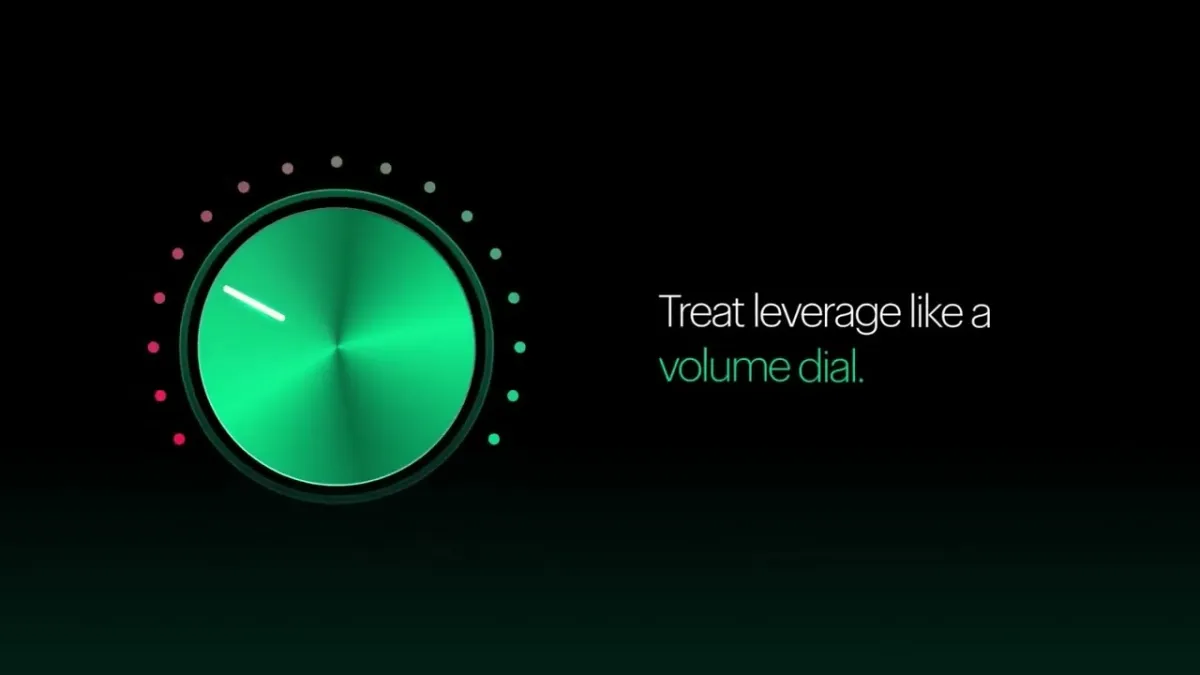
It amplifies your gains and losses, so smaller price moves have a bigger effect on your cash. If your losses approach the amount you put in, Kalshi automatically closes your position, which is called liquidation.
The leverage examples are mathematical in nature and are not intended to imply that customers have achieved or may achieve similar results.
04Margin
How margin works
Margin is the deposit you post to open a futures position — not a loan, not a fee. It sits in your account as collateral and comes back when you close the trade, adjusted for gains or losses. Think of it like a security deposit: you don't lose it just by holding a position.
The margin requirement for perpetual futures is typically a fraction of the contract's total value — that's what makes leverage possible. On a $100,000 position, you might post $5,000–$10,000 to open it. If the position moves against you, that deposit is what absorbs the loss.
Margin and leverage are not the same thing. Margin is the deposit. Leverage is how much exposure that deposit gives you. Post $5,000 to control a $100,000 position and your leverage is 20×. More leverage means a smaller margin buffer — and less room for the market to move against you before liquidation.
The two numbers to know
- Initial margin — what you post to open the position.
- Maintenance margin — the floor your account can fall to before a margin call is triggered, typically around 90% of initial margin.
If mark-to-market losses push your balance below maintenance margin, you'll need to top up to the full initial margin requirement — not just back to the maintenance level.
On Kalshi
Your margin account earns 3.25% interest annually on any cash sitting in it, whether it's backing an open position or idle. Most perps platforms pay nothing on your cash.
What to watch for
Margin requirements aren't fixed — they can move with volatility. A string of losing sessions can quietly erode your buffer even without a single dramatic move, which is why keeping a cushion above the maintenance margin matters. If a margin call goes unmet, the platform can force-close your position — sometimes without warning and at a worse price than a stop loss would have triggered.
05Liquidation
When does liquidation happen?
The cash you put into a trade is your cushion. If the market swings against you and your cash approaches zero, Kalshi closes your position automatically — that's liquidation.
At 2×, it takes roughly a 50% move against you. At 5×, it takes roughly 20%. More leverage means a thinner cushion, and less room for normal market swings.
Liquidation limits further losses, but it isn't a guarantee. In fast-moving markets, your position can close at a worse price than the trigger. Setting a stop loss lets you pick your own exit first.
06Exits
Decide when to exit: take profit & stop loss
Take profit and stop loss are autosell tools that close your position automatically at a price you set in advance. Take profit locks in a gain — stop loss caps a loss. Set both when you open a trade and your exits trigger whether you're watching or not.
Take profit
Pick a price where you want to automatically lock in your win.
Example: Bitcoin is at $50,000 and you expect it to rise. You set a take profit at $60,000 — once it hits that level, your position closes and the gain is locked in. No need to be watching, no decision to make in the moment.
Bitcoin rises from $50,000 to $60,000. The position closes automatically at the take-profit level — a gain of +$10,000.
Stop loss
Pick a price where you want to automatically cut your losses.
Example: Bitcoin drops from $50,000 to $40,000. With a stop loss set at $40,000, your position closes there — limiting the loss instead of letting it run further.
One thing to know: stop loss orders execute close to your trigger price, but not always exactly. In fast-moving markets the price can slip past your level before the order goes through, so leave a little room rather than setting it right at your limit.
Bitcoin falls from $50,000 to $40,000. The position closes automatically at the stop-loss level — a loss of −$10,000.
Stop loss vs. liquidation
These are two different things. A stop loss is a limit you set yourself, at a price you choose. Liquidation is a forced closure by the platform when your losses have used up your margin. You don't choose when liquidation happens, and it typically occurs at a worse price. A well-placed stop loss should prevent you from ever reaching liquidation.
Why both matter for perps
Leverage amplifies moves in both directions — at 5× leverage, a 20% move against you can wipe out your position. And since perps never expire, a losing trade can stay open and keep losing unless something closes it. Setting both orders when you open a trade is one of the most useful habits you can build.
Sizing your exits: risk-to-reward
Take profit and stop loss work best as a pair. The distance between your entry and each order sets your risk-to-reward ratio. Entering at $50,000 with a take profit at $60,000 and a stop loss at $45,000 means risking 10% to aim for 20% — a 1:2 ratio. Many traders aim for roughly double what they're risking, which means they can be wrong more often than right and still come out ahead.
A few things to avoid:
- Setting your stop loss too close — normal crypto volatility (2–3%) can close a trade before anything meaningful has happened.
- Not setting one at all — the market trades 24/7 and won't wait for you.
- Moving your stop loss further away once a trade is losing — that's how small losses become big ones.
07Funding
How the funding rate works
The funding rate is a small, recurring payment between traders on opposite sides of a perpetual futures contract. It keeps the perp's price in line with the real-time spot price of the asset it tracks — the job that expiration dates do for traditional futures contracts. Since perps never expire, the funding rate takes on that role instead.
When one side of the market gets crowded, that side pays a fee to the other, pulling the contract price back toward spot.
- Positive funding rate: the contract's price is above spot. Traders in an up position pay traders in a down position.
- Negative funding rate: the contract's price is below spot. Traders in a down position pay traders in an up position.
The platform doesn't collect the fee — it moves directly between traders on opposite sides.
How it's calculated
The rate is built from two components: a small, steady baseline set by the platform (the interest rate), and a variable amount that grows or shrinks based on the gap between the contract price and spot (the premium). The wider the gap, the larger the funding rate.
When it's paid
Funding settles every eight hours automatically for crypto — on Kalshi, at 12:00 AM, 8:00 AM, and 4:00 PM ET — and once a day for precious metals, at 10:00 AM ET. Any portion of the funding interval when the underlying market or trading is closed does not contribute to the funding rate.
It only applies if your position is open at settlement. On a $5,000 position at a typical rate of 0.01%, you'd pay or receive around $0.50 per window. Small on its own, but it compounds the longer a position stays open.
A sustained positive or negative rate can also signal market sentiment — reflecting whether more traders are positioned up or down.
The current funding rate and countdown to next settlement are shown on the trading screen before you open a position.
08Interest
Earn interest on your cash
Kalshi pays 3.25% a year on the cash in your Perpetuals margin account — whether it's backing a position or sitting idle. You need an average daily balance of $250 to qualify.
Most perps platforms pay nothing on your cash. On Kalshi, your cash earns interest no matter which way you trade or how much leverage you use.
Interest is different from the funding rate — funding moves between traders, interest comes from Kalshi.
Funding is charged on your position, interest is paid on your cash — so at higher leverage, interest covers proportionally less. Funding resets every 8 hours for crypto and once a day for precious metals. Any portion of the funding interval when the underlying market or trading is closed does not contribute to the funding rate. It can also turn negative: instead of paying funding, you collect it. Annual figures assume the current rate held for a full year. Interest is 3.25% APR on your cash, calculated daily and paid monthly, and requires a $250+ average daily balance; currently available to eligible customers in the US and its territories, with rate and eligibility subject to change. Figures are illustrative and not a prediction of results.
09Perps vs futures
How perpetual futures differ from traditional futures
Traditional futures contracts have an expiration date — a fixed point at which the contract settles and closes. Perpetual futures don't. That single difference changes how the two contracts work in practice.
| Feature | Perpetual futures | Quarterly futures |
|---|---|---|
| Expiry | None | Every quarter |
| Settlement | None | Cash settlement at expiry |
| Price anchor | Funding rate | Arbitrage at expiry |
| Rollover | None | Required each quarter |
With traditional futures, if you want to keep your exposure after a contract expires, you have to roll it — close the expiring contract and open a new one. That rollover comes with a cost tied to the difference between spot price and futures price (the basis), which can be positive or negative depending on market conditions.
Perps skip that entirely. There's no expiry, no rollover, and no settlement date. Instead, the funding rate keeps the perp price anchored to spot — doing the job that expiration does for traditional futures.
When each makes sense: Perps are better suited for active traders who want continuous exposure without managing contract cycles. Traditional futures tend to fit institutional use cases — hedging against future price moves, basis trading, or aligning with reporting periods.
Kalshi is the first CFTC-regulated platform in the US to offer perpetual futures, giving American traders regulated access to a product previously only available offshore.
What you can trade
Kalshi offers CFTC-regulated Perpetuals across equity indices, major cryptocurrencies, metals, and energy, each with its own maximum leverage.
 US 50013.7×
 Gold15.2×
 Silver8.2×
 Platinum6.6×
 Palladium4.5×
 Aluminum8.0×
 Copper7.8×
 BitcoinBTC5.8×
 EthereumETH4.4×
 ChainlinkLINK3.4×
 XRPXRP2.7×
 SolanaSOL2.6×
 HyperliquidHYPE2.1×
* WTI oil positions have a 10-year expiration.
Leverage values reflect current API data and may change without notice.
Frequently asked
How are Perpetuals different from predictions, stocks or options?expand_more
Perps are unique in three ways:
Two-way trading: you can trade on whether the price of an asset will go up or down without owning it.
No expiration: predictions and options have a strict end date. Perps never expire — you can hold a position for five minutes or five months and cash out whenever you want.
Leverage: you control a larger position than the cash you put in, which amplifies both your gains and your losses.
What are the trading hours?expand_more
Crypto, gold, and silver trade 24/7, so you can open and close positions at any time.
All other assets trade 24/5, so you can open and close positions at any time between Sunday at 6:00 PM ET to Friday at 5:00 PM ET.
What is the funding rate?expand_more
A perp follows an asset's price, but it trades in its own market with its own buyers and sellers, so the two prices can drift apart. To keep them close, platforms use a mechanism called the funding rate. Kalshi rebalances crypto three times a day, and precious metals once a day. Any portion of the funding interval when the underlying market or trading is closed does not contribute to the funding rate.
If more traders hold an up position, the perp price gets too high, so they pay a fee to the traders with a down position to bring it back. If more hold a down position, it works in reverse.
Example: You hold a $5,000 up position and the funding rate comes in at 0.01% for that window. You pay $0.50 to traders positioned down. If funding were -0.01%, you'd receive $0.50 instead.
You can see the real-time funding rate directly on each product page — if the funding rate shows 0%, no one is paying anyone. Funding fees are strictly capped at 2% of your position per window.
Can I earn interest?expand_more
The cash in your Perpetuals margin account earns interest, whether it's backing an open position or sitting in your account. The current rate is set at 3.25%. Interest is calculated on your balance at the end of each day and currently paid out once a month. You'll need an average balance of at least $250 to qualify.
You earn interest whether you trade an up or down position. Keep in mind that interest isn't a cushion against losses: fees, funding rate, and a losing trade can outweigh what it adds, and it doesn't prevent liquidation.
Interest accrual is currently available only to eligible users in the United States and its territories. Rate and eligibility are subject to change.
What is liquidation?expand_more
When you open a trade with leverage, your initial capital acts as a safety cushion. If the market moves against you, that cushion shrinks — and once it falls below the minimum required, Kalshi automatically closes your position to limit further losses. That's liquidation. It's designed to stop losses from growing, but it can't guarantee your balance won't go negative.
The golden rule of leverage: more leverage means a thinner cushion, and less room for your trade to survive normal market swings. At 5× leverage, a Bitcoin drop of around 7% could wipe out your cushion and liquidate you.
What to do about it: set a stop-loss when you open your trade, so you decide the price where it closes instead of leaving it up to liquidation.
Can I lose more than I deposit?expand_more
Auto-liquidation mechanisms are designed to limit losses by closing positions when margin thresholds are breached, but they do not function as a guaranteed stop-loss. Rapid or extreme market movements, including gaps in price or periods of illiquidity, may result in execution at prices significantly worse than the liquidation trigger, potentially producing a negative account balance.
Are there required minimums?expand_more
Minimums tend to be low and depend on the asset. Each Perpetual sets its own minimum size, but generally you can get started for as little as $1. To earn interest on your cash, you'll need an average daily balance of at least $250.
Are Kalshi's Perpetuals regulated?expand_more
Yes. Kalshi's Perpetuals are CFTC-regulated perpetual futures. Kalshi is the first company in US history to offer regulated perpetual futures to American traders.
Keep learning
Deeper dives on how Perpetuals work, and how they compare to everything else.



Ready to trade Perpetuals?
Kalshi's Perpetuals are live — regulated, onshore, with transparent funding rates and no expiry.